Blog17 min read
The 2025 creator playbook for bio link health, auto-redirects and revenue recovery
How link rot costs creators money, and how to find broken bio links, redirect them and recover the revenue.

Hana
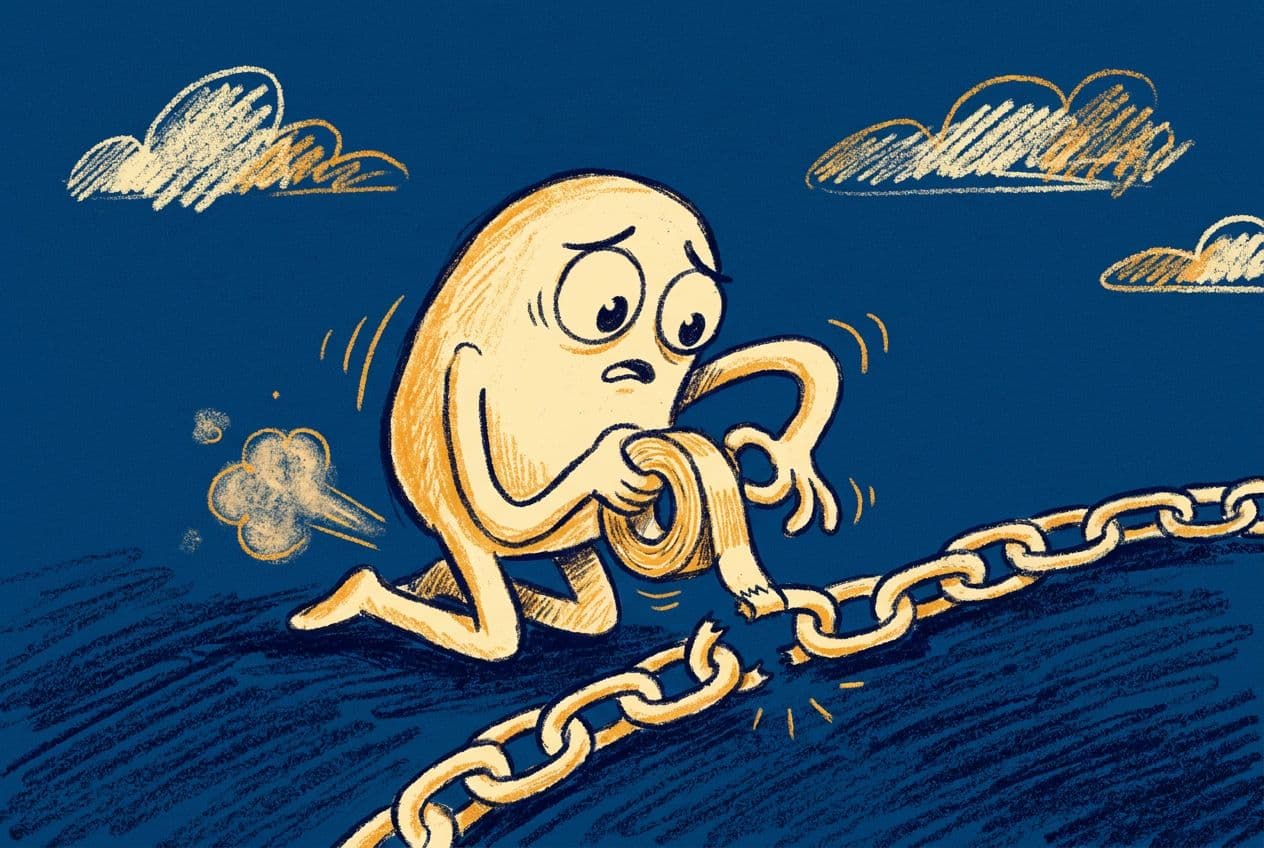
Link rot used to be treated as an SEO side note. For creators, it costs real money.
When Trackonomics (part of impact.com) scanned affiliate URLs, about 40% had some kind of issue. Other industry models estimate that broken, out of stock or misrouted links cost more than 160 million dollars in lost commissions every year.
If your business runs through the one link in your bio, checking those links is worth far more than a QA chore.
This playbook covers how link decay drains money from your funnel, and how a Linky style setup can win some of that revenue back in 2025.
1. The direct cost of link rot in the creator economy
The creator economy was valued at about 205 billion dollars in 2024, and forecasts put it at 1.3 trillion dollars by 2033. Creator ad spend is growing about four times faster than media overall.
There's a lot of money moving, and the infrastructure underneath it is fragile. Pew Research found that 25% of all webpages that existed between 2013 and 2023 are gone, and that 23% of news sites and 21% of government sites already contain at least one broken link.
If most of your sales go through one bio link, that decay is a serious risk to your business.
Link rot as direct revenue risk
A few data points:
- Trackonomics and impact.com report that about 3 to 10% of live affiliate links are broken.
- Over 40% of scanned affiliate URLs have some form of issue, from redirects to wrong pages.
- Affluent.io sees 12 to 16% broken links on large publisher sites.
Industry models suggest that in the United States alone, about 2.5 million affiliate clicks a month end up on 404 pages, out of stock pages or the wrong product. That's at least 160 million dollars in lost commissions each year.
And that figure leaves out lost lifetime value, plus the email signups and new followers who never convert and never come back.
Why bio funnels are fragile by design
A typical mobile path looks like this:
- Social profile on Instagram, TikTok, YouTube, or LinkedIn
- Link in bio page
- Tracking or shortener redirect
- Merchant product detail page
- Cart
- Checkout
Every hop is another place for things to break, and every redirect adds latency.
About 60 to 65% of global web traffic is on mobile, and social usage is closer to 99% mobile. Small delays feel bigger on a phone, and a broken step ends the purchase.
So a low single digit percentage of broken or slow links can wipe out a high single digit percentage of your revenue from that channel.
The stakes by vertical are not equal
Links decay faster in some verticals than others.
- Fast fashion. Product cycles are short and inventory turns every 30 to 45 days, so links age quickly as items sell out, move to clearance or change URLs. Broken links cost around 19.69 dollars per 1,000 clicks.
- Beauty. Constant launches and discontinuations mean products vanish or change without warning. Revenue lost per 1,000 clicks is around 21.60 dollars.
- Finance. Offers are more stable, so fewer links break. But average order value is high, with loans or accounts worth thousands, so revenue lost per 1,000 broken clicks is around 30 dollars, sometimes more.
Creators in fast fashion, fast beauty, gaming and short term offers need to check link health weekly. Finance, SaaS and education can get by with quarterly checks, but each broken link hurts more.
From maintenance chore to leadership topic
Put a broken link rate in the low single digits together with millions of clicks a year and rising creator CPMs, and you get real pressure on top line revenue and gross margin. If content is a core sales engine, it affects valuation too.
Linky is built on the idea that link health is a way to grow revenue, not a cleanup job you get to occasionally.
2. Anatomy of the mobile bio funnel and where money slips away
Here's the funnel you run every day:
- Someone sees your short or post.
- They tap your profile.
- They tap your bio link.
- They skim your link in bio page.
- They tap a product.
- They land on a merchant page.
- They reach cart and checkout.
Baseline 2025 numbers
Numbers vary by niche, but these work as a baseline:
- Bio click through rate is about 3% for standard link in bio tools.
- Average ecommerce conversion rate is around 2.9%.
- Checkout abandonment is close to 70%.
Out of 100 people who see your profile link, about 3 click. A fraction of those reach checkout, and a fraction of those finish. Slow redirects and broken pages add friction on top of that.
What to do:
- Map this funnel for your top platform.
- Note every redirect or tool in the path.
- If you have the data, measure click through and conversion at each step.
Latency is an underrated enemy
Google reports that 53% of mobile visitors leave if a page takes more than 3 seconds to load. A 1 second delay cuts satisfaction by double digits and increases bounce.
Affiliate redirect chains often go like this: the user taps your bio link, the bio tool loads, the click triggers an affiliate network redirect, then merchant tracking, then finally the product page.
Each hop adds hundreds of milliseconds, and on older phones or weak wifi it feels worse. You only ever see the final conversion rate, so the drop caused by slow redirects rarely shows up.
The main failure modes that drain revenue
1. Dead links and 404 pages
About 74% of users who hit a 404 leave and never return, so that click's conversion potential is gone. You earned the view with time, energy and often media spend, and the 404 throws it away.
2. Out of stock products
Bounce rises by 40 to 50% when users land on an out of stock page.
There's a lot to win back here, though. Research suggests up to 60% of customers will buy a substitute from the same retailer if they see a good alternative, and about 15% switch brands. Redirecting cleanly from an out of stock item to a similar in stock one, or to a curated collection, recovers a lot of that value.
3. Geo blocked or wrong region links
With a global audience, some users will hit geo restricted content or the wrong storefront. For someone in the United Kingdom landing on a United States only product, it's effectively a 404, and revenue from those clicks is close to zero.
4. Slow load and extra seconds
An extra second of page load often means 20 to 30% higher bounce and roughly a quarter fewer conversions.
The slow hops hide inside tracking providers, third party scripts and old landing pages. All you see is lower conversion, so it's easy to assume the creative didn't land.
A simple numeric example
Take a creator with 100,000 link in bio clicks a month. If 5% of the final merchant links are dead or misconfigured, 5,000 clicks go nowhere.
At a blended revenue per click of 2 dollars (after conversion and commissions), that's 10,000 dollars a month left on the table, or 120,000 dollars a year. And these are people who were already engaged enough to click through from social, to your bio, to the offer.
Where Linky sits in this funnel
Linky sits between your bio and the merchant.
It monitors every hop in near real time, watching for 404 pages, out of stock flags, latency spikes and geo mismatches. When something breaks, Linky sends traffic to the best available alternative using rules you set once.
That way each click is treated as something to protect, not just a pageview to count.
3. Half life of a link by vertical
Older web research looked at links on sites like the New York Times or Yahoo and found link half lives measured in years, often between 2 and 15.
Creators work on much shorter timelines. Your effective link half life depends on inventory turnover and how often offers change, not only on how old the URL is.
Inventory driven half life
A quick cheat sheet:
- Fast fashion: about 8 to 12 inventory turns per year. Products are replaced every 30 to 45 days, so links to specific SKUs decay quickly as those SKUs move or disappear.
- Mid market fashion: about 4 to 6 turns per year, with products changing every 60 to 90 days.
- Premium and luxury: about 2 to 4 turns per year. Links last longer, often 90 to 180 days.
- Gaming and offers: keys expire, limited events run for days and seasonal drops rotate. Some links only work for a few days or weeks.
For your content library, the question to ask is how long each destination stays useful and accurate.
From half life to audit cadence
Given those patterns, a fixed quarterly manual audit won't keep up. A more practical schedule:
- Fast fashion and fast beauty: automated scans weekly, or at least every two weeks.
- Mid market fashion, consumer tech, lifestyle: monthly automated scans.
- Finance, SaaS, education: quarterly scans, plus extra checks when offers or terms change.
If 10% of your top links go bad each month in fast fashion and you wait a quarter to react, larger creators and media companies can lose five or six figures a year.
Regular scanning plus automatic fallbacks through Linky makes this a project that pays for itself.
Linky as always on monitor
Linky crawls monetized links continuously, so you're not waiting for someone on your team to spot a broken page in a DM.
Over time it learns which merchants churn inventory faster, which kinds of URLs fail more often, and where your link half life is shortest. You can use that to decide where to focus new content and where to send your highest value traffic.
4. The intervention ROI stack and what recovers the most revenue
Fixes don't all pay back equally. Think of them as a ranked stack, starting with the highest ROI and least effort.
1. Automated 404 monitoring and redirect rules
Start here. About 74% of users who hit a 404 leave and never come back.
Trackonomics data shows 3 to 10% of affiliate links are broken. For brands and big publishers, fixing them often returns 14 to 1, with payback inside a month.
With Linky you:
- Run continuous 404 scans across your bio links and deep links.
- Set default rules, for example sending failed product pages to a brand category, a store homepage or a curated evergreen collection.
- Get Slack or email alerts with suggested replacements when a top earning link breaks.
This closes the biggest and most obvious leak.
2. Inventory aware fallbacks for out of stock products
An out of stock product doesn't have to mean a lost sale. About 60% of customers are open to a substitute from the same retailer when they see a clear option, and a minority switch brands.
Tools like Everflow Smart Links report strong results from redirecting store traffic to active offers.
With Linky you:
- Plug in merchant feeds from Shopify, WooCommerce or major affiliate networks.
- Detect when a product is out of stock or discontinued.
- Automatically send traffic to one of three options:
- The same product in another size, color, or variant.
- The highest converting lookalike item in that catalog.
- A creator curated collection, including dupes.
What would have been a dead end becomes a guided shopping path.
3. Geo and currency aware routing
Most creators have international audiences. For many Instagram, TikTok and YouTube accounts, 30 to 60% of followers live outside the home country.
If all your links point to one regional store, a large share of those users see the wrong pricing, odd shipping or errors.
With Linky you:
- Detect the user's country or region when they click.
- Send them to the right storefront, for example .co.uk instead of .com.
- Keep your affiliate tags and UTM parameters intact.
- Optionally show local currency pricing in previews.
Geo fixes look minor, but they recover close to 100% of the revenue that used to die on the wrong pages.
4. Speed optimization through edge redirects
Every redirect hop adds latency. A typical affiliate chain takes 100 to 300 milliseconds per hop on mobile networks, so three or four hops push you close to the 3 second danger zone.
With Linky you:
- Run redirects at the CDN or edge level.
- Collapse multi hop paths into fewer hops while keeping the tracking you need.
- See latency per link so you can drop slow partners or paths.
Shaving a second off the shopper journey can lift conversion by double digits.
5. Coupon validation and offer integrity
Coupon engines tend to show about 4 to 1 ROI for channels that rely on timed offers.
The risk is expired or invalid codes: someone gets to checkout, enters your code and sees an error.
With Linky you:
- Validate coupon and offer URLs on a schedule.
- Remove or swap expired promos from high traffic bios.
- Append active codes to URLs, or pass them to on site experiences where supported.
That keeps the funnel clean and protects your audience's trust.
Suggested priority order
For most teams:
- Turn on automated 404 scanning and default fallbacks.
- Add inventory aware routing for your top 20 to 30% revenue links.
- Add geo and currency routing once you have a significant audience outside your home country.
- Improve speed with edge redirects and fewer hops.
- Add coupon and offer validation around big campaigns.
Teams running this stack on Linky should see higher earnings per click and revenue recovery they can point to.
5. Inside Linky, a modern link health and routing architecture
Most link in bio tools just group links together, and many shorteners just mask URLs. Linky works as a routing and measurement engine that keeps your bio funnel healthy and fast.
1. Branded short domain as foundation
Moving to a first party branded domain tends to raise click through rate, with some studies putting the lift around 34%. Platforms like Instagram are also more suspicious of generic shorteners that spammers use heavily.
With Linky, everything runs through a domain such as:
go.yourbrand.comshop.creatorname.com
That gives you more trust and control, plus a stable first party context for tracking.
2. Always on link health scanner
Linky crawls your monetized links from:
- Bios
- Evergreen posts
- Top performing content
It looks for:
- 404 pages
- Long redirect chains
- Soft 404s
- Slow destinations
- Geo blocked URLs
Then it ranks the issues by revenue impact, using clicks, earnings per click and recent sales, so you know which ones to fix first.
3. Dynamic routing and rules engine
Linky uses rules to decide where each click goes. For example:
- If the destination returns a 404, send to fallback URL X.
- If a product is flagged as out of stock, send to alternative Y.
- If user country is the United Kingdom and the merchant supports a .co.uk store, use that endpoint.
- If latency crosses a threshold, route to a faster mirror or pause the link.
You write the logic once and Linky applies it across thousands of links.
4. Inventory and offer integrations
Linky connects with Shopify, WooCommerce, major affiliate networks and merchant product feeds, and syncs availability, price and promo status.
That lets you build evergreen collections that stay stocked with available products, without editing links by hand across hundreds of posts.
5. Privacy resilient measurement with server side tagging
Third party cookies are on the way out. Safari and Firefox already block many, and Chrome is phasing them out. Vendors like Stape and CookieYes recommend moving to first party, server side tracking.
With Linky you:
- Send clicks through a first party domain.
- Route requests through server side Google Tag Manager or a similar endpoint.
- Capture and normalize UTM parameters and other tags before the redirect.
- Use integrations with Meta CAPI, Google Ads and analytics APIs so attribution keeps working as browser storage changes.
You keep enough signal to measure your funnel.
6. Analytics, alerts, and recovered revenue reporting
Linky dashboards show:
- Percentage of healthy versus unhealthy links.
- Number of clicks saved from 404, out of stock, or geo issues.
- Estimated revenue recovered by intervention type.
You get alerts when:
- A top earning link fails.
- A merchant feed breaks.
- A platform policy or domain block affects your links.
Put together, that's a setup for 2025 and beyond: branded, fast, aware of location and inventory, and resilient to privacy changes. Link maintenance becomes an ongoing growth program instead of an occasional cleanup.
6. Governance, workflow, and messaging: make link health a habit
Tools help, but process is what makes results repeatable. Without clear ownership, link health sinks to the bottom of the list until there's an emergency.
A simple RACI model keeps roles clear.
A lightweight RACI for creator teams
Borrowing from project management guides like ManyRequests and The Digital Project Manager, you could split it like this:
- Creator: responsible for pre publish checks on new content, and informed about major link issues that affect audience trust.
- Affiliate or growth manager: accountable for link health, and responsible for triaging alerts and coordinating fixes.
- Content operations: responsible for running scans and updating content, and accountable for hitting service levels.
- Engineering or analytics: consulted on technical fixes, tagging and integrations, and accountable for data and infrastructure.
Practical cadences and SLAs
Keep it light.
- Pre publish linting: run an automated Linky check so new posts don't go out with malformed or blacklisted URLs.
- Rolling daily scans: scan the top 20% of links by revenue or traffic every 24 hours.
- Weekly or monthly full audits: weekly for fast fashion and fast beauty, monthly for most others, and quarterly for slower moving finance or SaaS offers.
Then set response targets:
- Critical links (top 10% of revenue): acknowledge within 4 hours, fix within 24 hours.
- Major links (next 40% of revenue): acknowledge within 24 hours, fix within 72 hours.
- Long tail links: fix in batched weekly sprints.
That gives you structure without much bureaucracy.
Messaging for buy in and budget
Different stakeholders care about different things.
For creators:
- You recover revenue from content you've already made, with no extra filming or posting.
- Fewer broken offers means less frustration for loyal followers.
For affiliate and growth marketers:
- Link rot hides in your funnel and drags results down.
- Fixing it improves real ROAS and conversion without extra media spend.
- Attribution gets cleaner and drop offs are easier to explain.
For CMOs and CFOs:
- Existing traffic can yield 5 to 10% incremental revenue, with payback in weeks rather than years.
- Linky reduces risk in a core revenue channel while cookies fade and platform rules shift.
Real examples help make the case. People on Reddit have shared cases of more than 650 affiliate clicks with zero recorded conversions because of broken tracking links, and it isn't rare.
On LinkedIn, audits of B2B bios show generic, unstructured profiles leaving tens of thousands of dollars a year on the table, while people who build clear funnels from profile to offer see six figure quarters.
Ignoring link health quietly undermines good creative and media work. Linky gives you the controls to keep your funnel working the way you planned.
7. Future proofing for 2026: policy, privacy, and platform change
The rules around tracking and links are changing.
Looming risks
- Third party cookie deprecation across major browsers.
- Intelligent Tracking Prevention and URL parameter stripping in Safari and other browsers.
- Social platforms tightening link and data policies, especially in finance, health, and sensitive niches.
What this means for creators
If tracking parameters break or cookies fail, you get:
- Under counted conversions and commissions.
- Revenue credited to the wrong channels.
- A higher chance that generic shorteners and spammy looking domains get blocked or rate limited.
Platforms want to protect users and clean up spam, so your links need to look trustworthy and behave well.
A simple Linky based checklist
To get ready for 2026:
- Move to a branded first party link domain.
- Route clicks through a server side tagging setup, such as server side Google Tag Manager on that domain.
- Enforce HTTPS and HSTS on all redirect paths.
- Standardize UTM and tracking parameter formats in Linky, and capture them server side before redirecting.
- If you have mobile apps, set up universal links and app links so users can skip the browser.
- Integrate a Consent Management Platform where required to stay compliant with GDPR, CCPA, and similar laws.
Linky as the abstraction layer
You shouldn't have to track every browser privacy change or Instagram link rule yourself.
Linky monitors link health, tracking integrity and routing behavior, and updates the routing logic underneath your links as outside policies change. You focus on content and partnerships while the infrastructure keeps your link revenue stable and compliant.
Conclusion
With up to 40% of affiliate URLs showing some kind of issue and mobile funnels as fragile as they are, every dead, slow, geo blocked or out of stock link in your bio is costing you commissions.
The fixes are fast and you can measure them: automated 404 monitoring, inventory aware fallbacks, geo and currency routing, edge level speed improvements, and coupon and offer validation. With branded domains, continuous scanning, dynamic routing and privacy resilient measurement, link maintenance becomes an ongoing growth program.
Teams that protect every click get higher earnings per click, cleaner data and more trust from audiences around the world.
To see what this looks like for you, start by scanning your current bio links at lin.ky and measuring how much revenue is stuck behind broken and slow URLs.