Blog17 min read
In-app vs. out-of-app commerce in 2025: a routing playbook for creators
Where in-app fees eat your margin, and how to route buyers with Linky so more of the sale reaches you.

Hana
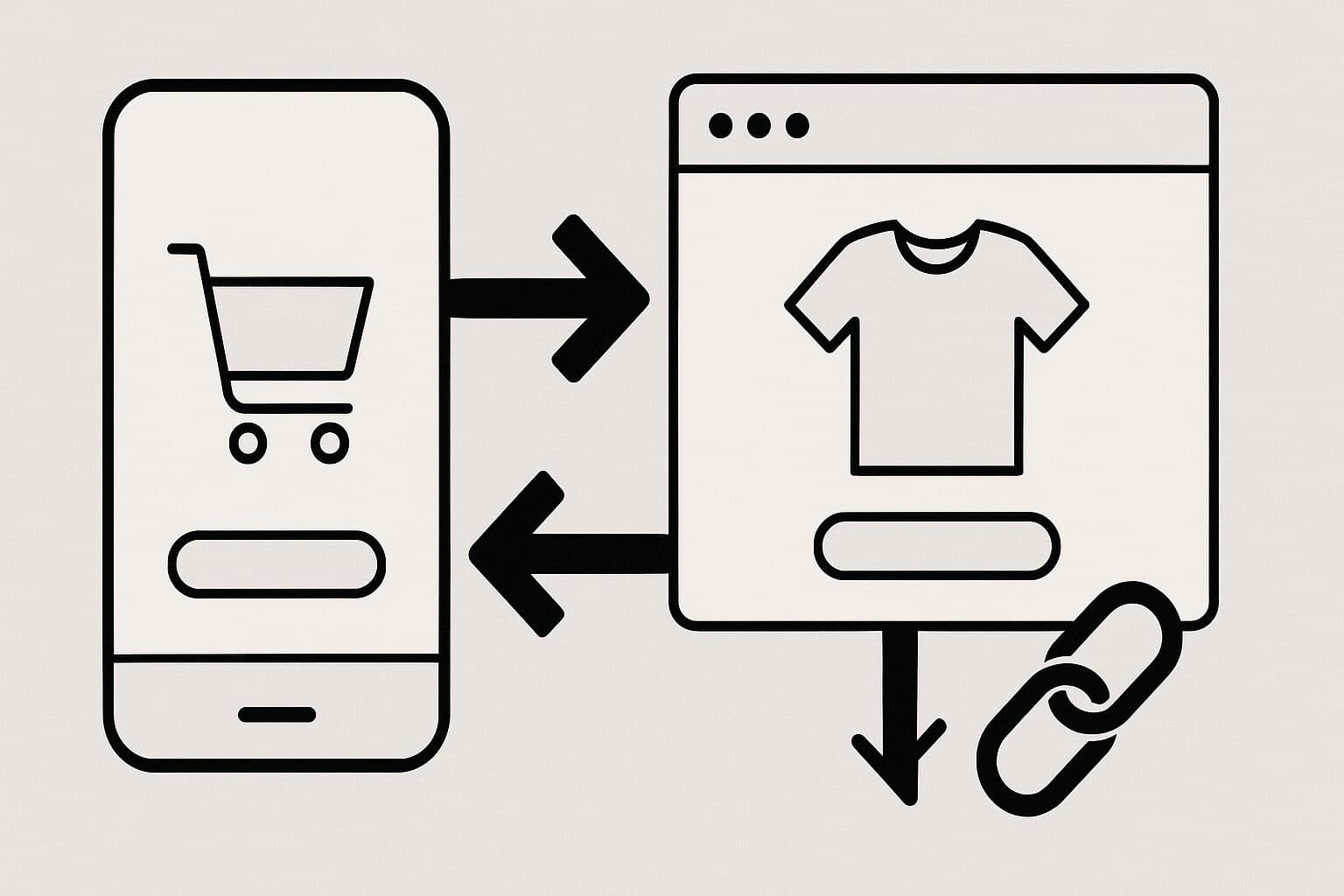
Should your bio link send shoppers to TikTok Shop or to your own site? In 2025 that one decision affects your margins, your list growth and how quickly you get paid.
Get the routing wrong and you can lose 8 or more margin points, watch your LTV stall, and have your cash stuck in slow payout systems. Get it right and you convert impulse buyers quickly, earn more over time from loyal buyers, and have a cash cycle you can plan around.
A static "one link, one destination" bio can't handle that. You need something that directs traffic, which is what Linky is built for.
This playbook for creators and small brands looks at what each platform is incentivized to do, and uses that to show when to lean into in app checkout and when to send people to a Linky page and an external checkout.
1. Why your 2025 bio link needs routing, not a single destination
TikTok, Meta and YouTube want different things from your traffic. TikTok wants the sale to stay in TikTok Shop, Meta now prefers the sale to happen on your site, and YouTube mostly acts as a traffic and affiliate engine.
If your bio still sends everyone to the same place, you're leaving money and data on the table.
Platform incentives flipped in opposite directions
TikTok Shop:
- Built in marketplace and product tiles in the feed
- A big push on live shopping and shoppable videos
- A US GMV target near 17.5 billion dollars, with roughly 120 percent year over year growth
TikTok wants buyers to stay inside the app. The algorithm favors content that leads to TikTok Shop, because that increases session time and lets TikTok track the full purchase.
Meta (Instagram and Facebook):
- Deprecating Checkout with Instagram for most merchants by August 2025
- Shops still exist, but product tags link out to your own site for the transaction
Meta wants to be the shop window rather than the cash register, so your site becomes the default destination.
YouTube:
- Product tagging and shopping features
- A strong focus on affiliate, especially with big retailers
- Transactions mostly finish on retailer websites
- Payouts run through AdSense, with long payment windows
YouTube wants to track its influence on commerce and let retailers handle checkout.
A single fixed destination in your bio ignores the fact that these are three different economic systems.
Why a static link hurts in real numbers
Start with some basic benchmarks:
- TikTok Shop conversion rates often sit around 0.4 to 0.6 percent. With the right products, content and offer, they reach about 7 to 10 percent
- Typical external ecommerce sites convert at around 1.5 to 3.0 percent
On the surface, an external store always looks like the winner, with higher conversion and lower fees. But in app checkout still has an edge for cheap, impulse products in the For You feed. The buyer taps, pays with stored details and moves on.
The catch is data:
- In app purchase flows often cap LTV near 1.3x the first order value, because you get limited contact data and weak remarketing outside the app
- External checkout with email and SMS flows pushes LTV above 2.4x the first order through replenishment, bundles and cross sells
So in app wins on instant conversion for cheap items, and owning the checkout wins on long term value and retargeting.
Where Linky fits
Linky isn't just a list of icons. It's a routing layer between your content and your checkouts.
You can send TikTok viewers to TikTok Shop for a 25 dollar impulse gadget while sending Instagram Reels viewers straight to your Shopify store for a 120 dollar bundle. Paths can change based on:
- Platform
- SKU
- Price and margin
- Geo
- Inventory in each channel
- Buyer history
The rest of this post is a decision framework you can plug into Linky, so routing runs on rules instead of guesswork.
2. The hard tradeoffs: fees, conversion, data, and payout speed
Before setting rules, you need to know what you give up each time you send a click to TikTok Shop or to your own site.
Conversion and engagement
From recent performance data and aggregated case studies:
- TikTok Shop
- Typical conversion around 0.4 to 0.6 percent
- The right offer and creative reach 7.1 percent conversion for low AOV products
- TikTok affiliate link engagement around 5.2 percent, about 160 percent higher than Instagram links
- External ecommerce (Shopify, Woo, custom)
- A common conversion range of 1.5 to 3.0 percent, higher for warm traffic and returning buyers
Creators keep leaning into TikTok Shop despite the lower average conversion because the algorithm gives shoppable content far more impressions. Ten times the impressions at half the conversion still means more sales.
Your own store gets less traffic, but it's usually warmer and further along the path to buying.
Fees and margin hit
TikTok Shop:
- A referral fee of around 5 to 6 percent
- Commission for creators or affiliates, often 2 to 8 percent
- Transaction fees on top
- An effective take rate often near 11 percent in real accounts
External site:
- No platform cut of revenue
- Standard payment processing of around 2.9 percent plus a small fixed fee
Two quick examples:
- A 45 dollar skincare product
- Cost of goods and shipping: 15 dollars
- On TikTok Shop, fees pull your margin down to around 59 percent
- On your own site, you keep about 67 percent
- A 120 dollar gadget
- Cost of goods and shipping: 50 dollars
- Margin on TikTok Shop sits near 39 percent
- Margin on your own site sits near 47 percent
An 8 point gap on higher ticket orders adds up, and you'll feel it in your ad budget, creator payouts and R&D.
Data ownership and LTV ceiling
This is the part most people ignore.
When you sell inside TikTok Shop:
- You can't export customer email and phone data
- You can only remarket within TikTok
When you send shoppers to your own checkout:
- You collect email, and often phone numbers
- You can run email flows, SMS campaigns and cross platform ad audiences
Research across DTC brands shows a pattern:
- In app only purchase paths tend to flatline near 1.3x first order value
- Flows with proper email and SMS reach 2.4x or higher LTV through:
- Replenishment campaigns
- Bundles and upsells
- Cross category pitches
In app only flows give you a quick win, but they also put a ceiling on the relationship.
Cash flow and payout speed
You're running a business, and a business needs cash in hand, not promises.
External checkout with Shopify or Stripe:
- Payouts land in about 2 to 3 days
TikTok Shop:
- Settlements run 1 to 31 days after delivery
- Add shipping time and it's 8 to 38 days from order to cash
YouTube Shopping affiliate:
- Payouts often run on 60 to 120 day windows through AdSense
For small brands and solo creators, those delays hurt. You have to put off inventory restocks, pause paid campaigns that depend on fast payback, and take on more risk during launches.
The core tradeoff
- In app checkout
- Good for cheap, impulse purchases and algorithm driven discovery
- Higher fees, slower cash, weak data
- External checkout
- Good for margin, LTV and control over cash
- Requires you to own the funnel and build trust on your landing pages
A static bio link ignores these tradeoffs. Dynamic routing in Linky lets you account for them.
3. Algorithm myths versus reality: will external links kill reach
One fear stops a lot of creators from sending traffic to their own site: "If I send people off platform, my views will die."
Here's what testing actually shows.
What experiments show on reach
Controlled experiments on TikTok and Instagram Reels keep showing the same patterns:
- Posts with visible URL overlays or raw links in captions
- Median reach reduction of around 12 percent on TikTok
- Around 8 percent reduction on Instagram Reels
- Accounts with a link in bio, including a Linky URL
- No measurable reach penalty
- A verbal or text CTA like "link in bio" that sends users to an external site through your bio
- No clear reach penalty, as long as content quality and watch time stay strong
The problem is how a link appears inside your content, not the fact that you have an external destination.
A simple mitigation playbook
To protect your reach and still send traffic to your Linky page:
- Keep captions clean
- No raw URLs in TikTok, Instagram Reels or Shorts descriptions
- Make "link in bio" your default CTA
- Tell viewers to tap the Linky URL in your profile
- Use pinned comments
- Put your Linky link in a pinned comment on TikTok and YouTube for extra clicks
- Control the variables when you test
- Keep creative, posting time and hashtags similar, so you don't blame the link for a reach drop that has a different cause
A quick case study
A fashion creator with around 500,000 followers ran a simple test.
- Week 1
- Regular content, no external CTA
- Average views around 250,000
- Week 2
- Same content style and cadence
- A strong "shop via link in bio" CTA
- Link in bio pointed to Linky, which routed to Shopify
- Average views around 245,000, a drop of about 2 percent
- Around 15,000 dollars in sales from the linked collection
Reach held steady and revenue went up.
Once you keep raw URLs out of your feed and your CTAs clean, you can make routing decisions based on economics and strategy instead of fear.
4. Policy and risk: when in app is dangerous or impossible
Routing is about staying live as well as performance. Some products can't use certain in app commerce tools without risk.
Restricted categories and geo constraints
TikTok Shop has tighter rules around:
- Supplements and health related products
- Cosmetics with strong health or medical claims
- Some foods
- Adult products and weapons
- 18+ enforcement and strict claim language
Meta restricts or polices:
- Adult content and some adult products
- Alcohol
- Medical products and devices
- Weapons and related accessories
Meta checkout is going away, but its ad and content policies still apply.
YouTube has its own guidelines covering:
- Regulated goods
- Medical content
- Adult themes in monetized content
If your product is in or near one of these categories, in app tools can break without warning.
Recent shifts that force rerouting
A few 2025 changes matter for routing:
- Meta checkout sunset by August 2025
- Instagram and Facebook Shops become product discovery layers that send people to your own site
- TikTok Shop updates
- Stricter enforcement on health and beauty claims
- Follower thresholds, for example grandfathering creators with over 5,000 followers before early 2025 for full TikTok Shop features
If your product relies on specific claims to convert, TikTok Shop becomes a risk.
Enforcement patterns to avoid
You've probably heard stories like these:
- A supplement brand uses words like "cures", "treats" or "guaranteed results" in product copy and has its listings removed
- A cosmetics line posts unapproved medical claims and loses shopping access across multiple products
- A creator promotes a restricted SKU in a region where it isn't allowed and triggers account level flags
You don't want your main sales flow sitting on top of that kind of trap.
Turn risk into routing rules inside Linky
The approach is straightforward:
- Tag restricted SKUs in your product catalog
- Use labels like "health", "claims sensitive", "adult" or "geo limited"
- Set rules in Linky
- If a SKU has a restricted tag, always route to external site checkout, never to TikTok Shop
- Use geo routing
- If the viewer is outside the countries TikTok Shop supports, route to your external product page
- Keep a compliance safe landing page
- For gray area products, build a simple, claim safe page on your own site and send risky traffic there
That keeps your account safer while still letting interested buyers pay you.
5. The routing decision framework: who goes where and when
This is the core of the playbook. Treat it as a decision tree that lives in Linky: set it up once, then adjust as data comes in.
Signal 1: referrer platform
Start with where the click comes from.
- Instagram and Facebook
- Route to your external site by default
- Meta is retiring in app checkout, so use these platforms to drive traffic to your own store
- TikTok
- For low AOV, impulse friendly products, use in app checkout via TikTok Shop
- For higher ticket or complex offers, route out to your store
- YouTube
- Default to an external site: your own store or a specific affiliate landing page
- Only use YouTube Shopping affiliate paths when that revenue channel is your focus and you can live with longer payouts
Signal 2: product type
Not every product belongs in an in app flow.
- Restricted or sensitive SKUs
- Send to external checkout for control and compliance
- Subscriptions and recurring orders
- Send to external subscription pages where you control billing logic and retention flows
- Complex bundles
- Use your external site for bundle builders, tiered discounts and story based upsells
Signal 3: price and margin
Price changes the math on fees and margin. A simple rule of thumb:
- Average order value below 50 dollars and the referrer is TikTok
- Default to TikTok Shop for first time buyers if the product is eligible
- Take advantage of impulse conversion and accept the fee hit on those cheap items
- Average order value above 75 dollars
- Route to external checkout by default
- Protect your margin and collect data on considered purchases
Refine these thresholds as your own numbers come in.
Signal 4: buyer relationship
New buyers and known buyers should take different paths.
- First time or unknown visitors
- If they come from TikTok and view a low AOV eligible product, favor in app checkout for the first transaction
- Move them into your owned channels later through packaging inserts and post purchase communication
- Known customers
- If Linky or your site identifies them through cookies or a logged in state
- If they arrive from email or SMS clicks
- Route them to your external site, where you can grow LTV with bundles, loyalty and education
This two step approach (in app for a cheap first order, then external for future orders) matches the LTV lift data for brands that own their customer data.
Inventory and geography logic
Then add practical constraints.
Inventory based rules:
- If TikTok Shop stock for a SKU drops below a threshold, for example 5 units
- While your Shopify inventory is still healthy
- Linky switches new clicks to your external store, so you avoid overselling and cancellation headaches
Geo based rules:
- If the viewer is outside TikTok Shop's supported regions, such as the US, UK or certain Southeast Asian markets
- Route them to your external store
Linky uses edge workers with providers like Cloudflare or AWS. These workers read request headers such as referrer, IP based geo and device type, plus SKU metadata, and respond with the correct destination in under 100 milliseconds.
These rules don't need any sensitive PII, which keeps things friendly for GDPR and CCPA.
Cash flow and algorithm shock safeguards
You also need backup rules for when performance shifts.
- Monitor a 14 day rolling conversion rate on your TikTok Shop traffic
- If conversion drops more than 20 percent in a 48 hour window
- Linky flips a contingency rule that sends 100 percent of TikTok clicks to your external site while you investigate
- Track pending TikTok payouts during key launches
- If unsettled payout volume exceeds a 15 day threshold and cash is getting tight
- Update your Linky rules to route more traffic to external checkout so cash comes in faster
These protect you from quiet changes in platform behavior or payout queues.
6. Scenario playbooks: ready made rules you plug into Linky
Here are four common scenarios, with routing rules you can set up in Linky.
Scenario A: impulse under 50 dollar flash sale
Goal: move units fast on a small, trendy product, like a viral beauty tool, a hair accessory or a novelty kitchen item.
Routing:
- TikTok referrer
- Send users to the TikTok Shop product page for a direct in app purchase
- Instagram, Facebook and YouTube referrers
- Send users to a lightweight external checkout page with:
- Product details
- Social proof
- Express payment options
- Send users to a lightweight external checkout page with:
This works because TikTok brings reach and strong impulse buying, while the other platforms support it and still convert well on your own checkout.
Scenario B: 50 to 150 dollar bundles
Goal: sell curated bundles, such as a full skincare routine or a starter kit.
Routing:
- All platforms
- Route to an external landing page designed for the bundle
On that page, you:
- Explain the story behind the bundle
- Show before and after examples
- Offer one click upsells or variations
In app checkout tools are weaker at bundle logic and upsells. An external page does a better job with variations, education and raising AOV.
Scenario C: high ticket and subscriptions
Products:
- Gadgets at 150 dollars or more
- Coaching or courses
- Memberships or subscriptions
Routing:
- All platforms and referrers
- Send to your external product or subscription page
Why:
- You avoid losing 8 or more points of margin on high ticket items
- You control billing for recurring offers
- You own email and phone data for long term LTV
Expensive items also need more trust building, and your own page gives you room for social proof, FAQs and guarantees.
Scenario D: limited drops and tight inventory
Products:
- Collab capsules
- Limited sneaker drops
- Seasonal or holiday editions
Routing logic:
- At the start of the drop
- Route TikTok traffic to whichever channel has the most inventory, often TikTok Shop if you stocked it for discovery
- When TikTok Shop inventory falls below a threshold, like 10 units
- Linky sends new clicks for that SKU to your external store, which can handle inventory or preorders more flexibly
- When you're sold out across all channels
- Linky routes clicks to a "Sold out" page that captures email and SMS for restock alerts or next drop announcements
You avoid overselling, which protects your reputation, and the hype turns into list growth for the next drop.
7. Measuring what works: test in Linky, not on the algorithm
Routing isn't something you set and forget. You need to keep feeding data back into it.
A common mistake is changing content and links at the same time, so nobody can tell what caused what. Instead, run experiments at the link layer in Linky and keep your content constant.
Key KPIs to watch
Track these by destination and by campaign:
- Conversion rate
- TikTok Shop vs Shopify or your external store
- Average order value
- By destination and by campaign type
- Lifetime value
- Compare users whose first purchase was in app with users whose first purchase was external
- Customer acquisition cost and 90 day payback
- Especially if you run paid campaigns or pay out a lot to creators
- Attributed GMV per Linky route
- Use UTM parameters plus your analytics tool of choice
Experiment designs that respect reach
You can test routing without confusing the algorithm.
A/B split inside Linky:
- 50 percent of TikTok clicks go to TikTok Shop
- 50 percent go to your external page
- Same content, same posting times, same hooks
Geo split:
- Send viewers from California to in app checkout
- Send viewers from Texas to external checkout
- Run it for a fixed period, then swap the states if you want to confirm the pattern
Sequential test:
- Week 1: send all traffic to TikTok Shop
- Week 2: same content playbook, send all traffic to Shopify
- Compare conversion, AOV, payouts and refunds
All of these run inside Linky, so your content schedule and creative process don't change.
Reporting cadence
A simple rhythm:
- 24 hour pulse
- Check click through rate on your Linky link, conversion by destination, and revenue per 1,000 views
- Weekly review
- Look at cohort LTV and repeat orders by acquisition path
- Check whether in app buyers from two weeks ago have moved into your owned channels yet
- 90 day review
- Measure whether high fee in app buyers produce enough follow up value once you move them into email or SMS
Feed what you learn back into your Linky routing rules.
Bringing it together: a moving target you control
In 2025, choosing a checkout path isn't a matter of taste. TikTok wants you on TikTok Shop, Meta pushes you toward your own site, and YouTube folds shopping into affiliate and AdSense.
TikTok Shop is the fast lane for low AOV, first time impulse buyers. External checkout protects your margin, gets you paid faster, and grows LTV because you get real customer data.
You don't have to pick one forever. With a rules based bio link through Linky, you can:
- Route by platform, price, region, inventory and buyer history
- Keep your content clean so your reach holds steady
- Test in app against external paths without risking your standing with the algorithm
- Let the numbers decide where each shopper lands
To start, map your products against the four signals in section 5, then set those rules up in Linky at https://lin.ky. Run one or two simple experiments over the next month and see how your margins, cash timing and LTV respond.